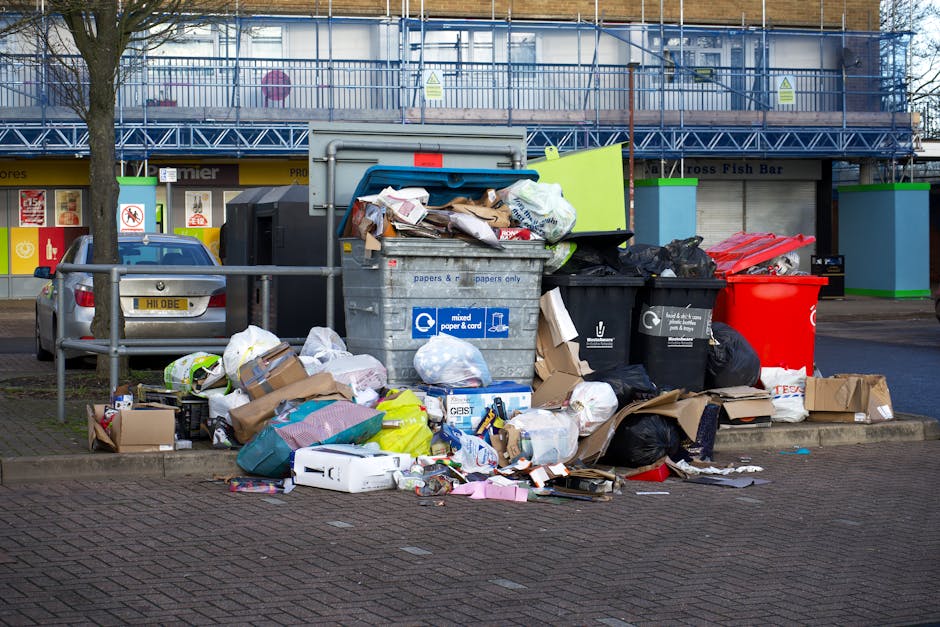
West Drayton station bulky rubbish pickup times and tips
If you are trying to clear bulky rubbish near West Drayton station, timing matters more than most people expect. Miss the right window and you can end up blocking a pavement, holding bags in a hallway, or standing around while a van can't safely stop. Get it right, though, and the whole job feels strangely straightforward. This guide to West Drayton station bulky rubbish pickup times and tips explains how to plan collection windows, avoid common mistakes, and choose the most sensible disposal route for homes, flats, offices, or renovation waste around the station area.
In practical terms, the best approach depends on what you are moving, how much there is, and how easy it is to access the property from the road. That sounds obvious, but in real life it's where most delays happen. A bit of planning saves time, stress, and yes, a few awkward conversations with neighbours.
Table of Contents
- Why West Drayton station bulky rubbish pickup times and tips Matters
- How West Drayton station bulky rubbish pickup times and tips Works
- Key Benefits and Practical Advantages
- Who This Is For and When It Makes Sense
- Step-by-Step Guidance
- Expert Tips for Better Results
- Common Mistakes to Avoid
- Tools, Resources and Recommendations
- Law, Compliance, Standards, or Best Practice
- Options, Methods, or Comparison Table
- Case Study or Real-World Example
- Practical Checklist
- Conclusion
- Frequently Asked Questions
Why West Drayton station bulky rubbish pickup times and tips Matters
Bulky rubbish around a station area is not just "stuff you need gone". It often sits in a place where access is tighter, footfall is higher, and timing has to be more considerate than it would be on a quiet residential street. Near West Drayton station, you may be dealing with commuters, narrow driveways, shared entrances, or roads that already feel busy at peak times. That means the difference between a smooth pickup and a messy one can come down to ten minutes, a gate code, or whether items are ready downstairs rather than still in a loft.
People usually search for pickup times because they want certainty. Fair enough. They need to know when a collection can happen, how long it might take, and whether bulky items can be removed before work, after work, or during a narrow gap in the day. The "tips" part is just as important. A good pickup is rarely about brute force. It is about preparation, safe lifting, access, and matching the method to the waste.
There is also a cost angle. The more organised the collection, the less likely you are to pay for wasted time or a second visit. That can matter a lot if you are clearing a flat, moving house, or dealing with a sudden pile of furniture after a landlord handover. Truth be told, bulky waste tends to multiply when you are already busy. Life has a sense of humour like that.
How West Drayton station bulky rubbish pickup times and tips Works
Most bulky rubbish pickups follow a simple pattern: you describe what needs removing, the collection is planned around access and volume, and the team arrives in a suitable time window. The more detailed your description, the better the timing estimate. A single sofa is one thing. A sofa, bed frame, chest of drawers, and two bags of mixed junk is another altogether.
For station-area jobs, pickups are usually easier when the waste is grouped near the exit and not scattered through several rooms. If items are on an upper floor, someone has to move them safely. If they are in a rear garden, the route to the vehicle matters. If parking is tight, the vehicle may need extra time to position itself. Small things, but they add up fast.
In our experience, the most reliable pickups are the ones where the customer thinks like the crew for a minute. Can the van stop nearby? Are there stairs? Is there lift access? Is anything awkward, heavy, or fragile? That simple mindset makes the whole process calmer.
If the job is more than just a few bulky items, it may make sense to look at broader options such as general waste removal, or service-specific help like furniture disposal and mattress and sofa disposal. Those pages are useful when your bulky rubbish is part of a bigger clear-out rather than a single-item pickup.
Key Benefits and Practical Advantages
The main benefit of planned bulky rubbish pickup times is control. You know when the collection is likely to happen, you can free up access, and you avoid the kind of last-minute scramble that usually ends with one shoe on, one shoe off, and a hallway full of boxes.
Other advantages are practical rather than flashy:
- Faster clearance: The right time slot reduces waiting around and repeated handling.
- Less disruption: Important in shared buildings, near station roads, or where neighbours are close by.
- Safer lifting: Heavy items can be moved with proper planning instead of rushed carrying.
- Cleaner handover: Helpful before tenancy changes, refurbishment, or business reopening.
- Better sorting: Makes it easier to separate reusable, recyclable, and general waste streams.
There is a quieter benefit too: peace of mind. People underestimate how much a tidy pickup plan reduces mental noise. Once the waste is scheduled, the rest of the day opens up a bit. You can get on with work, school runs, or the next stage of a move without that nagging "we still need to deal with the sofa" feeling.
For larger clearances, you may also want to compare targeted services. A home full of mixed items may suit home clearance or house clearance, while a garage full of old tools and broken furniture may fit garage clearance. It depends on the shape of the problem, not just the postcode.
Who This Is For and When It Makes Sense
This topic is relevant to a pretty wide group of people. If you are close to West Drayton station and need bulky rubbish gone, you might be:
- a tenant leaving a flat and clearing old furniture
- a homeowner replacing a sofa, fridge, or mattress
- a landlord or letting agent preparing a property
- a shop, office, or small business dealing with unwanted stock or furniture
- a contractor clearing leftover materials after work
- someone helping a relative empty a loft, garage, or spare room
It makes sense when the items are too large for standard bins, too heavy for you to move alone, or too awkward for a small car trip to a disposal site. It also makes sense when you need things gone on a schedule. A lot of people do not just need removal; they need a window that fits around shifts, school, or building access.
For business premises, a dedicated business waste removal approach may be more suitable, especially if the rubbish includes office chairs, filing cabinets, shelving, or mixed commercial material. If paperwork or confidential material is involved, a service such as confidential shredding can help keep sensitive items separate. That's one of those details people sometimes forget until they are halfway through a clearance.
Step-by-Step Guidance
Here is a practical way to plan a bulky rubbish pickup near West Drayton station without overcomplicating it.
- List every item clearly. Include furniture, white goods, bags, and odd extras like broken shelving or boxed clutter.
- Check access routes. Note stairs, lifts, narrow hallways, locked gates, permit bays, or restricted parking.
- Group items in one place if possible. A front room, ground-floor hallway, or accessible yard is ideal.
- Separate anything hazardous. Paint, chemicals, batteries, gas bottles, and some appliances need special handling. More on that below.
- Choose the right service type. Furniture, garden waste, builders' debris, and office clear-outs all have slightly different needs.
- Confirm timing around the property. If a neighbour needs the drive clear, or building access is time-limited, say so early.
- Prepare the area before the crew arrives. Move small obstacles, unlock gates, and make sure the route is safe.
- Ask about sorting and recycling. It is sensible to know what will be reused, recycled, or disposed of.
If your bulky rubbish includes renovation leftovers, it may be worth checking builders' waste clearance. If you are clearing outdoor waste like branches, soil, or old garden furniture, garden clearance is often the better fit. And if a skip feels more practical for a DIY project, the page on what can go in a skip is a handy reference point before you decide.
Expert Tips for Better Results
The best tip is simple: assume access will be tighter than you think. Even when a hallway looks wide enough, bulky items can catch on corners, banisters, radiators, or door frames. Measure if you can. If not, at least eyeball the tight turns and let the collection team know.
Another practical trick is to photograph the waste before collection. Three quick pictures can be more useful than a long explanation, especially if the job includes mixed items. You do not need a perfect setup. Just enough detail to show volume and type.
Here are a few small but useful habits:
- Put the heaviest items closest to the exit, not buried behind lighter clutter.
- Empty drawers and cupboards before lifting them. They are always heavier than they look.
- Remove loose glass, mirrors, or sharp edges where safe to do so.
- Keep pets and children away from the route on collection day.
- Leave enough light on stairs and in the hallway if the pickup is early or on a dull afternoon.
If you are clearing a specific item type, use a targeted service where it fits. Fridge and appliance removal is useful for bulky electricals, while furniture clearance may be better for mixed household pieces. And if the job is more end-to-end, a broader loft clearance or flat clearance can save a lot of back and forth.
One more thing. If timing is tight, book earlier than you think you need to. Morning collections often create more flexibility for the rest of the day, especially around a station area where traffic, access, and people moving about can introduce little delays. Small margins matter.
Common Mistakes to Avoid
Most bulky waste problems are not dramatic. They are just annoying. And usually avoidable. The same mistakes crop up again and again.
- Leaving items in multiple rooms: It slows everything down and makes the job harder to assess.
- Forgetting access details: Locked gates, parking restrictions, or stair-only access can change the plan.
- Mixing hazardous items with general rubbish: This is a big one. It can create safety and compliance issues.
- Underestimating volume: "Just a few bits" has a habit of becoming a full van load.
- Not checking item type: A sofa, a wardrobe, and a broken fridge are not the same in terms of handling.
- Waiting until the last minute: Especially risky if you have a move-out deadline or building access slot.
People also forget to ask what happens after collection. Will the waste be sorted for recycling? Are there items that need to be kept separate? These are sensible questions, not fussy ones. If a provider is clear on process and safety, that is usually a good sign.
Tools, Resources and Recommendations
You do not need specialist equipment for most household pickups, but a few basic tools help enormously. A tape measure, strong gloves, a torch for dark loft corners, and a marker pen for labelling items can make the prep stage much easier. If you are clearing a basement, shed, or storage room, a small sack trolley can also save your back. Do not hero it. Your shoulders will thank you later.
For planning, these pages can help you think through the type of clearance you need:
- pricing and quotes if you want to understand cost drivers before booking
- recycling and sustainability if you care about reuse and responsible disposal
- payment and security if you want reassurance on the booking process
- insurance and safety if access, lifting, or awkward items are part of the job
If you are unsure whether an item qualifies as bulky rubbish or needs special handling, the safest route is to describe it plainly and ask before collection day. "Old freezer from kitchen" is more helpful than "large metal thing". One gets the point across faster.
Law, Compliance, Standards, or Best Practice
For bulky rubbish pickup in the UK, the important principle is simple: waste should be handled responsibly, collected safely, and passed to an appropriate disposal route. You do not need to become a waste-law expert, but you do need to avoid leaving questionable items in the wrong place or mixing hazardous waste into a general load.
Best practice usually includes:
- keeping access routes safe and unobstructed
- separating items that may leak, cut, burn, or contaminate other waste
- using the correct handling method for heavy or awkward furniture
- making sure any contractor is insured and follows sensible safety procedures
- avoiding fly-tipping, even by accident
Hazardous waste deserves special care. That includes some chemicals, paint, oils, asbestos-containing material, batteries, and certain electrical items. If you are not sure, do not guess. Put it aside and get proper advice first. For those sorts of jobs, a dedicated hazardous waste disposal service is the safer option.
It is also worth checking the provider's published policies if you are booking a bigger job or a regular service. Pages like health and safety policy, insurance and safety, and terms and conditions are not glamorous reading, obviously, but they do tell you a lot about how the service is run. A bit boring. Also useful.
Options, Methods, or Comparison Table
There are usually several ways to handle bulky rubbish near West Drayton station. The best one depends on time, volume, item type, and how much lifting you want to do yourself.
| Method | Best for | Pros | Watch-outs |
|---|---|---|---|
| Bulky rubbish pickup | Single items or a small mixed load | Quick, convenient, minimal hassle | Needs clear access and accurate description |
| Full clearance service | Flats, houses, lofts, garages, offices | Good for larger jobs and mixed clutter | May be more than you need for one item |
| Skip-based disposal | DIY waste or ongoing project waste | Handy if you are generating waste over time | Requires space and a bit more self-loading |
| Specialist item removal | Mattresses, sofas, fridges, appliances | Better handling for awkward items | Not always suitable for mixed loads |
If your main issue is just a sofa and a mattress, targeted disposal may be enough. If you are clearing out a property after a move, a larger package like house clearance or home clearance may actually be simpler. The cheapest option on paper is not always the cheapest in real life, especially if it turns into two separate jobs.
Case Study or Real-World Example
Here is a typical scenario. A small flat near the station is being handed back at the end of a tenancy. The residents have a worn sofa, a mattress, an old desk, and a few bags of general clutter. They both work shifts, so the pickup has to happen in a tight window before midday. There is no lift, the stairwell is narrow, and parking is limited outside.
The job goes smoothly because the items are photographed in advance, the access route is confirmed, and everything is grouped near the front door the evening before. On the day itself, the crew only needs a few minutes to assess, then the heavier items are moved carefully down the stairs. No drama, no last-minute chaos, no shouting down a phone from the pavement. A rare delight.
What made it work?
- The volume was described honestly.
- The awkward access was mentioned up front.
- The items were ready, not scattered.
- The right disposal route was chosen for each item type.
That kind of preparation is what turns bulky rubbish pickup from a stressful errand into a tidy, same-day style solution. Simple, really. Not always easy, but simple.
Practical Checklist
Use this checklist before your pickup day. It takes five minutes and can save a surprising amount of hassle.
- Make a full list of items to remove.
- Check whether any items are hazardous, electrical, or unusually heavy.
- Measure narrow doorways, stair turns, or lift openings if needed.
- Confirm parking, access codes, and any time restrictions.
- Move items to one accessible location where possible.
- Keep fragile or sharp objects separated.
- Decide whether you need furniture removal, appliance removal, or a general clearance.
- Ask about recycling, reuse, and disposal handling.
- Clear the route so the collection can happen safely.
- Have someone available if access needs to be opened or explained.
A small tip that helps more than you'd think: leave a little breathing room around bulky items. If every corner is packed tight, the removal takes longer and everyone ends up doing that awkward sideways shuffle through a doorway.
Conclusion
Getting bulky rubbish picked up near West Drayton station is mostly about timing, access, and choosing the right method for the job. The more clearly you define what needs removing, the easier it is to arrange a pickup that fits around work, neighbours, and local traffic. A good plan means less stress, fewer delays, and a cleaner space sooner.
Whether you are clearing one sofa or a whole flat, the smartest move is to prepare early, describe the load honestly, and use the most suitable service rather than the nearest guess. That's the real difference between a hurried clear-out and one that feels properly under control.
Get a free quote today and see how much you can save.
And if you are staring at a pile of unwanted things right now, don't worry too much. It looks bigger from the doorway than it usually is. One clear plan, and it starts to shrink.
Frequently Asked Questions
What counts as bulky rubbish near West Drayton station?
Bulky rubbish usually means items that are too large, heavy, or awkward for standard household bins. Think sofas, mattresses, wardrobes, chairs, white goods, broken furniture, or mixed household clutter. If it needs two people to move safely, it probably belongs in this category.
How do I choose the best pickup time?
The best pickup time is the one that matches access, parking, and your own schedule. Morning slots are often easier if you want the rest of the day free. If the area is busy near the station, earlier is usually better, but the real priority is a time when the route is clear.
Can bulky rubbish be picked up from a flat with no lift?
Yes, usually, as long as the access route is safe and the items can be moved without damage or risk. It helps to mention stairs, narrow turns, and floor level in advance so the job can be planned properly.
What should I do with a broken fridge or freezer?
Fridges and freezers should be handled as appliances rather than general rubbish. They may need specialist removal because of their size and components. A dedicated appliance service is usually the safer and cleaner option.
Is it better to book one bulky item or wait until I have more?
If you only have one item, it can still be worth booking if you need it gone quickly or it is difficult to move. If more items are likely to appear soon, combining them may save time and reduce disruption. It depends on urgency and access.
Can I put everything into one pile?
For the collection team, one neat pile is far better than waste scattered through different rooms. It is easier to assess, easier to remove, and usually quicker. Just keep hazardous or sharp items separate.
What items need special care?
Hazardous waste, batteries, paint, chemicals, and some electrical items need careful handling. Some heavy or fragile furniture also needs extra caution. If you are unsure, describe the item rather than guessing.
How can I reduce the cost of a pickup?
Make the job easier to assess and quicker to complete. Group the items together, give a clear description, and mention access issues early. Choosing the right type of clearance for the job can also prevent paying for a bigger service than you need.
Do I need to be present during collection?
Usually yes, or at least someone should be available if access is needed. If the items are already in an accessible place and arrangements are clear, the process is much smoother. It saves the awkward "where is the key?" moment too.
What is the difference between furniture clearance and general waste removal?
Furniture clearance is more focused on bulky household items like sofas, tables, wardrobes, and chairs. General waste removal is broader and may suit mixed rubbish loads. If your pile is mostly one type of item, the targeted service can be the better fit.
Can bulky rubbish be removed the same day?
Sometimes, yes, if scheduling and access allow it. Same-day removal often depends on availability, location, and how clearly the job is described. The earlier you enquire, the easier it is to secure a slot that suits you.
What if my rubbish includes garden waste or building debris?
That is where category-specific help can be useful. Garden waste, soil, branches, and outdoor clutter may suit garden clearance, while rubble, timber, and renovation leftovers may need builders' waste clearance. Mixing everything into one vague pile usually makes things slower, not simpler.